Building with EEG
An electroencephalogram (EEG) measures electrical activity in the brain using electrodes on the scalp. It is one of the technologies used in non-invasive brain-computer interfaces (BCIs), and a different, imperfect but useful way to study attention, mental effort, and fatigue while learning happens.
To understand the hardware as well as the software, I started building my own eight-channel EEG. I worked from an open-source PCB design, sourced the parts, and assembled a board built around an ADS1299 and ESP32.
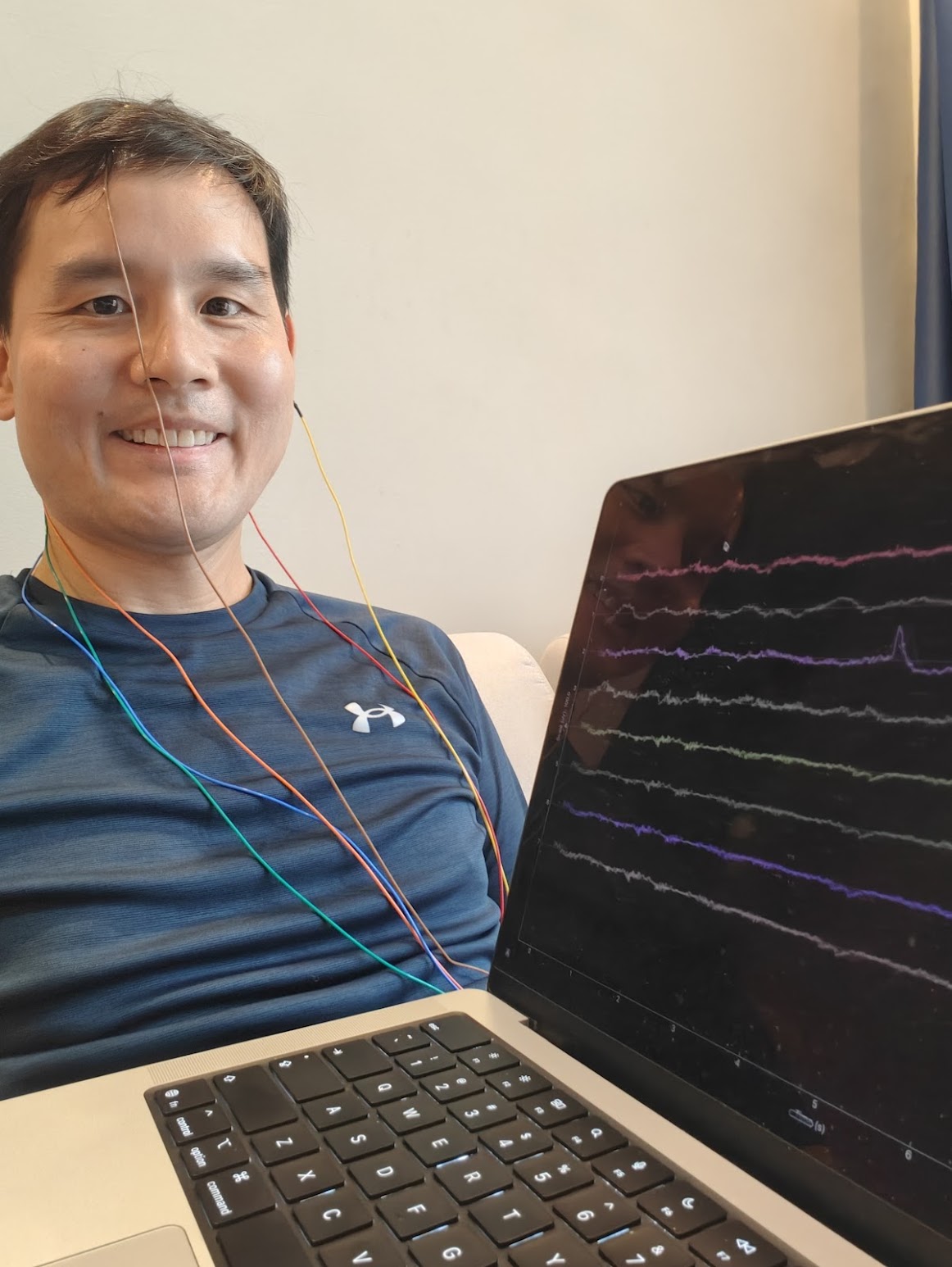
The build is also an exercise in signal acquisition, data collection, and hardware safety. The components for one unit came to roughly US$260, excluding an existing portable charger; the minimum PCB order meant the actual outlay was higher.
Learning through the Neural Interfaces Challenge
Alongside the hardware work, I’m participating in the Neural Interfaces Challenge across Tracks 1, 2, and 3. It gives me a practical way to learn from brain-signal data, work through decoding problems, and build a clearer picture of where current approaches are strong, and where they remain difficult.
Why brain-computer interfaces
As EEG hardware becomes more accessible and models improve at decoding brain signals, more of the hard problems become software, AI, and design problems. The challenge is making the technology useful and trustworthy for ordinary people.
The longer-term goal is simple: technology that helps people learn better and makes learning feel less daunting.